
An open letter to Shabana Mahmood, Secretary of State for the Home Department
Dear Ms Mahmood:
As many of us struggle to process the flurry of recent news around the Labour Party’s desired approach to the United Kingdom’s asylum ‘problem,’ I feel compelled to present a loose assemblage of thoughts in the most coherent form I can manage. Recently, Labour Co-op MP Seema Malhotra insisted to an audience in Chennai that Britain’s openness to ‘those coming legally’ is loud and clear within these policy reforms. As one of ‘those coming legally,’ however, this message (if true at all) is entirely lost within a din of anti-immigrant rhetoric.
Ms Mahmood, you and your Home Office are actively pursuing a number of extreme policies that have delighted the nation’s xenophobes and deeply alarmed the nation’s many immigrants, expert organisations, and charities. Such policies include: limiting the right to family reunification, introducing a levy on internation student tuitions fees, doubling the standard time for migrants on regular routes to settle, and enacting an astonishing twenty-year wait for permanent residency (or longer) for those on less regular routes. Labour is certainly not the first centre-left party to adopt a punitive immigration position in pursuit of short-lived political gains, but there is little evidence these moves will either reduce irregular migration—the apparent animus behind this action—or secure electoral support. (Reform seems pretty popular, actually.) It is true Labour has never really claimed to be a party of the comparatively few, yet it is a shocking development for the wager for power to be so apparent.
The UK media is playing its part as well, conjuring up the spectre of a foreign invasion against a nation seemingly unwilling to defend itself. It spends far more time droning on about ‘small boats’ than, for example, reflecting on the real and impending risk of the NHS collapsing should Labour’s reforms come into full effect. If the desire to focus on dinghies full of migrants making the treacherous crossing from France to England is so great, why not point out that the British government has explicitly allowed these crossings to continue through its refusal to establish safe and efficient routes for refugees and asylum seekers, its failure to implement humanitarian visas, and its clangourous withdrawal from the European Union more broadly?
What sort of political priority could justify your full-throated indictment of those tasked with controlling the UK border? It is no secret that the now-defunct UK Border Agency was accused of being too lax in its policing of the border in the name of, essentially, queue management. It is also no secret that Amber Rudd resigned in shame for being a bit too hostile in her tenure as Home Secretary. (Incidentally, Theresa May probably should have resigned at this point, rather than after mismanaging the aforementioned clangourous withdrawal.) There are clear risks in either approach to immigration and border control, yet you must know that the borders being ‘out of control’ is a powerful fiction at best and a wilful falsehood at worst.
When I first arrived in the UK the day before my twenty-fifth birthday, I never expected it to be an easy time. I was not seeking assistance. I did not come to be provided for. I am not interested in great-replacing anyone. (For this, I am fortunate, not ‘desirable.’) I moved to the UK to learn, to experience, and to grow. In the midst of a Trump presidency that feels like a pleasant dream compared to the current one, I was, I think, desperate to see a world beyond the one I had been watching fall apart.
As a second-generation immigrant living in the United States, I had a vague sense of how important, complicated, and consequential immigration and citizenship are. Still, I am forced to realise over and over again my failure to appreciate the exact nature of the effort and sacrifice my mother and her family made in moving from the island of Jamaica to the streets and avenues of New York City. I had no real understanding of the uncertainty of being a guest in another nation (not least Black ones from a Caribbean nation), the desire (or need) to make that nation your new home, nor the distinct feeling that people want you to ‘go home.’
As I have written elsewhere, my mother was born a citizen of the United Kingdom, by virtue of being born in a colony of the British Empire. By the age of two, she had become solely a Jamaican citizen, but her fondness of Great Britain, its culture, and its monarchy naturally continued. Jamaica still bore—in overt and subtle ways—the same Britishness it shed in early August 1962. There are few Americans, which my mother now is, as ready to shed copious tears over Queen Elizabeth II as she is. I myself, being your typical loutish American (born and raised), scornfully dismissed this without any honest understanding of the cultural elements that make my mother who she is.
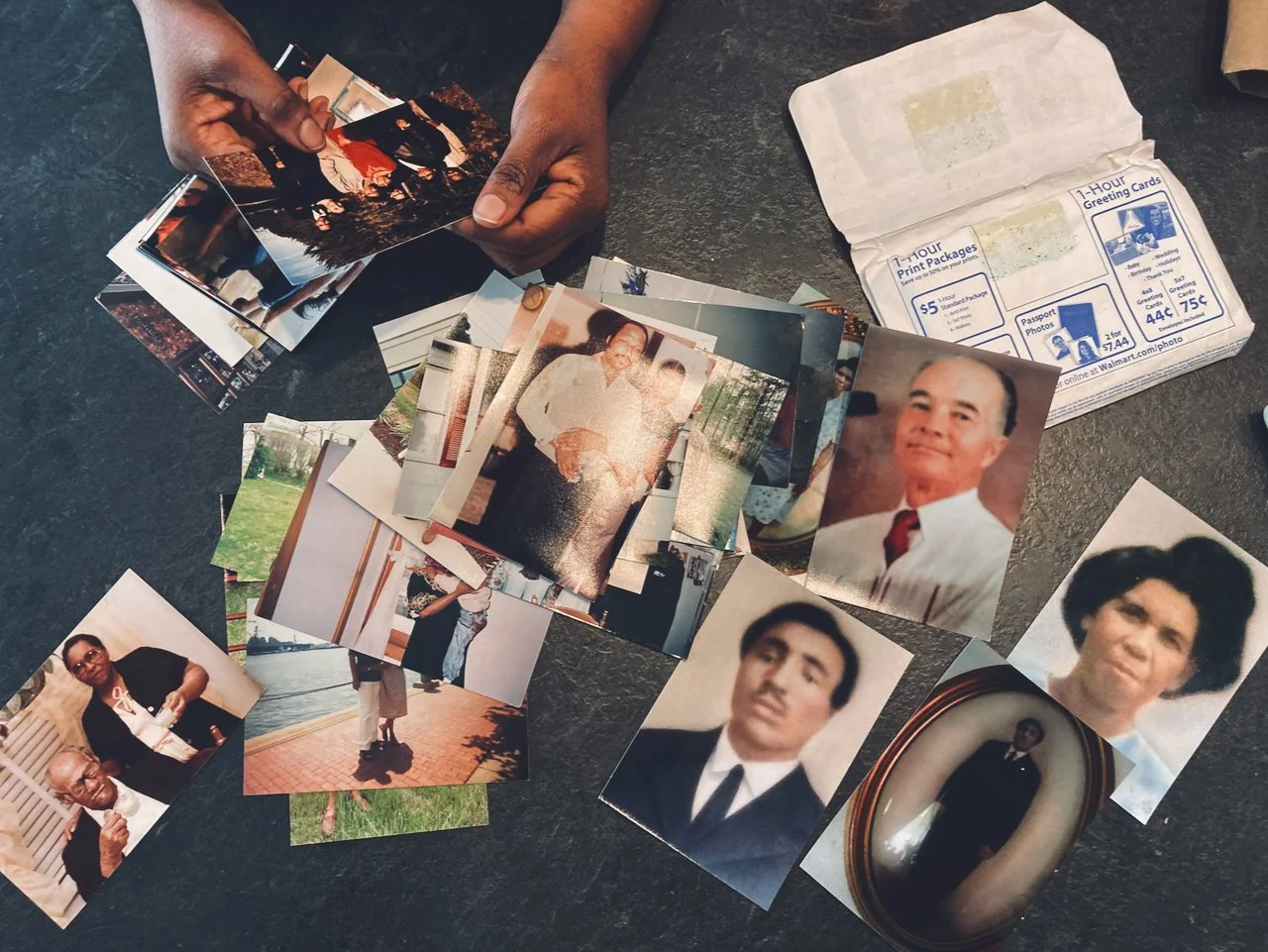
Worse still, there is British ancestry on both sides of my family. The answer to my unasked question about father’s comparatively lighter skin was one day presented unceremoniously as a photograph on the kitchen counter in my late twenties. And none of this includes my mother’s uncorroborated insistence that there are Scottish ancestors in her bloodline.
To any observer upon my arrival in London, though, I was of elsewhere. And I am of elsewhere. Like you, Ms Mahmood, migration is an integral part of my family history. By choice and by colonial circumstance, my family ended up in the US, and much later, my parents met in Vermont and married here and raised a family here. That is not inconsequential, but it is not the full story. I came to the UK, in part, to better understand this story through, like Gilroy, trying to understand the Black Atlantic.
Having now left the UK for an extended (hopefully temporary) stay in the US, I have watched from afar as my surrogate home cravenly chases the draconian immigration policies of Denmark (which brags about being particularly unwelcoming to asylum seekers and whose centre-left Social Democrats are, probably not unrelatedly, crashing out in real time) and (more tacitly) the United States (which currently features masked, plainclothes officers and dehumanising roundups of citizens and non-citizens alike).
Ms Mahmood, you are currently hurtling down the same regrettable path of feckless, second-generation British politicians before you, be they former Home Secretaries (Priti Patel, Suella Braverman) or not (Rishi Sunak, Kwasi Kwarteng). In so doing, you have earned the admiration of some of the most outspokenly vile human beings the UK has produced, those who cheer you on for shifting the Overton window in what history will show to be a brazen act of political self-sabotage.
You may retort that you know well what it is to be the target of some impressively ignoble individuals, that you reject and repudiate these individuals who surely hate your very being. I am sympathetic to the abuse you have faced in this regard, but repudiation is a bare minimum when you wield such political power. Perhaps you scarcely remember your own experiences of living as an immigrant, or perhaps they had no particular effect on how you understand yourself or your identity. In either case, it is not too late to choose a more magnanimous, more humanitarian approach to Labour’s immigration policy. The writing is scrawled clear across the walls of the US and Denmark: a draconian approach to immigration begets patently inhumane behaviours and does not engender social cohesion.
As the child of immigrant parents, someone who benefits from the social struggle of immigration without truly bearing its challenges, it is a dreadful look to weaponise your luck of the draw in favour of those desperate for a socially acceptable vessel for their racism, Islamophobia, and xenophobia. You say that a ‘broad patriotism is narrowing,’ but how can you be so sure it was ever there, but for the fickle winds of liberalism blowing in your parents’ favour?
It seems, Ms Mahmood, that you have made up your mind. To save yourself, you as a nation must push back the boats, if not literally then politically, by whatever means necessary. ‘Results are all that matter.’ To that I say shame on those second-generation immigrants who pull up the proverbial ladder behind them as a bid to their authenticity. Shame on those who fail to recognise that their patriotism is entirely unearned, a gift bestowed upon them before many of them were able to conceive of it. And shame to those too cowardly to protect, with the fullness of their strength, that which gave them the life they cherish so deeply.
Best regards,
Dr Adriel Elijah Miles